
Design Trends 2025 That Will Redefine Creativity Forever
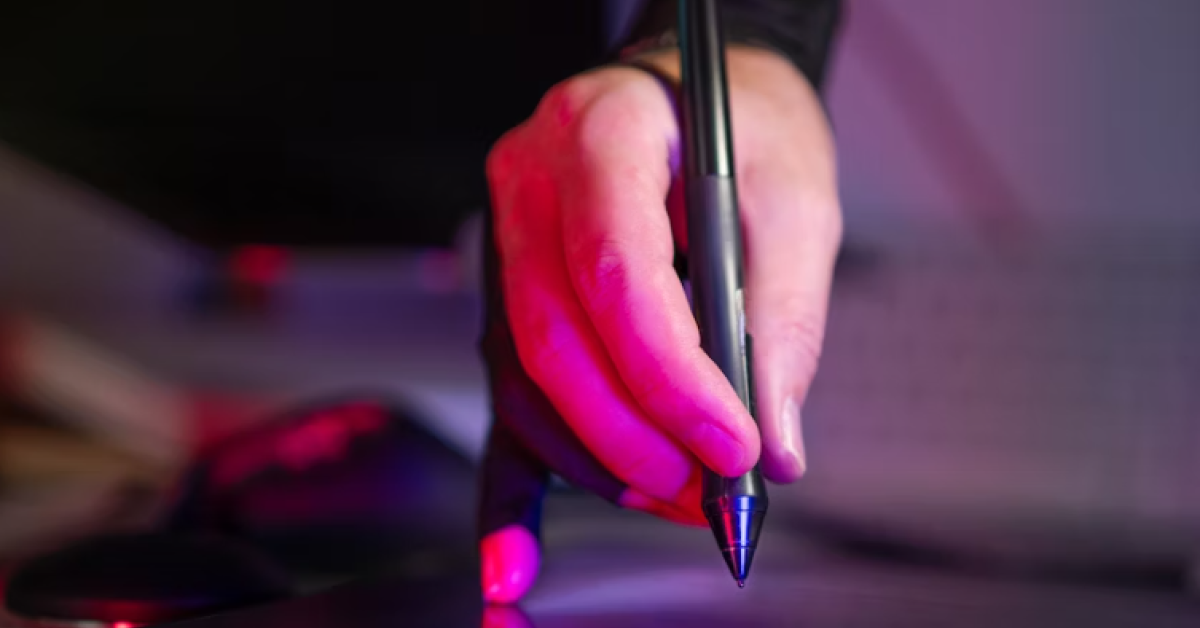
hand holding digital stylus on graphic tablet studio equipment creative tools neon light-Jakub Żerdzicki-unsplash.com
Design Trends 2025 That Will Redefine Creativity Forever
It’s 2025, and the world of design feels more alive than ever. Creativity is no longer about making things look good—it’s about making people feel something. The modern designer has become part artist, part storyteller, part technologist. In a time when artificial intelligence can generate images faster than imagination, human creativity has evolved, not disappeared. The question designers are now asking isn’t “What can I create?” but “How can I connect?”
The Human Touch in a Digital Age
For years, technology was feared to replace artists. But in 2025, the opposite has happened. AI and design tools have become collaborators, not competitors. Designers now use machine learning to explore new shapes, generate mood palettes, and test visual responses before ever showing a client. Yet, the real innovation lies in how they reintroduce emotion into these algorithmic outputs.
“We’re not designing for screens anymore,” says digital artist Lara Nguyen. “We’re designing for feelings.” From UX motion cues that mimic breathing rhythms to color palettes that respond to user moods, design is merging with psychology in unprecedented ways.
1. Humanized AI: The Co-Creator Revolution
Artificial intelligence has entered a new era—one that understands empathy. In 2025, generative AI is no longer just a productivity tool; it’s a partner in storytelling. Designers train personal AI systems on their own styles, emotions, and philosophies, resulting in a kind of “creative mirror” that reflects their aesthetic DNA back to them.
Instead of replacing originality, AI is enhancing it. Imagine sketching a rough idea for a logo and your AI assistant suggesting color moods based on the emotional tone of your concept. That’s not automation—it’s amplification.
2. The Rise of Sustainable Minimalism
Minimalism is no longer about cold perfection or endless white space. The new wave of minimalism is ethical, tactile, and rooted in purpose. Designers are prioritizing sustainability—not just in materials, but in message. A product that looks beautiful but damages the planet is no longer considered good design.
Expect to see muted palettes inspired by soil, water, and sunlight. Organic textures, recycled typography, and biodegradable packaging have become the new luxury. Brands are embracing imperfection, letting natural grain, asymmetry, and texture tell stories of authenticity.
- Less visual clutter, more mindful interaction.
- Use of sustainable materials in digital mockups.
- Design inspired by ecosystems rather than egos.
3. Beyond the Screen: Immersive and Spatial Design
The screen is no longer the limit. With AR glasses, holographic interfaces, and 3D environments, design has escaped the flat world of pixels. Designers are now architects of experience, shaping how people move, touch, and feel digital content.
Fashion brands are using virtual catwalks that can be experienced through augmented reality. Museums offer immersive exhibits where typography floats in midair. Even interior designers are using mixed-reality tools to visualize sustainable furniture layouts in real time.
As spatial design becomes mainstream, “user interface” is giving way to “user atmosphere.” Every interaction becomes a moment—designed, curated, and emotionally tuned.
4. Emotional Storytelling and Color Psychology
Design has rediscovered its heart. Colors are now chosen based not only on trends but on emotional resonance. The palette of 2025 reflects human recovery—muted greens for healing, coral tones for optimism, digital violets for calm in chaos. Brands are embracing vulnerability as part of their visual language.
Neuroscientists have confirmed that certain colors can reduce anxiety or boost trust. Designers are using this research to create brands that “feel safe” in a digital world overflowing with noise and uncertainty. In this sense, design becomes therapy—visual care for the human mind.
5. Cultural Fusion and Global Aesthetics
Design in 2025 is borderless. With digital collaboration happening across continents, cultural fusion has become a defining trait of modern aesthetics. Indonesian batik patterns inspire Scandinavian minimalism. African geometric motifs blend with Japanese wabi-sabi textures. The result is a new visual language—diverse, respectful, and universally human.
This global aesthetic movement celebrates inclusion and storytelling through design. It’s not about appropriation but appreciation—understanding the roots of beauty and allowing them to flourish in new creative forms.
6. Data as Design Material
One of the most surprising trends of 2025 is the artistic use of data. Instead of numbers and charts, data is being turned into visual poetry. Motion graphics respond to live environmental data, and generative art installations shift color based on local weather or human emotion feedback.
Designers are taking something once sterile—data—and making it poetic. It’s a new form of narrative, where information becomes beauty, and analytics become emotion.
7. The Future Is Empathy
If there’s one word that defines design in 2025, it’s empathy. Technology may drive the process, but humanity defines the outcome. From sustainable interfaces to emotionally aware branding, the designer’s job is to remind the world that beauty has meaning only when it connects.
As AI evolves and creative boundaries blur, one truth remains: machines can imitate style, but they can’t replicate soul. The designers of 2025 are not just creators—they’re translators of emotion in an age of algorithms.
Conclusion
The design world of 2025 stands at the crossroads of art, science, and human experience. The trends redefining creativity today are not just visual—they are deeply philosophical. They ask us to slow down, to feel, and to create with purpose. The future of design is not faster or flashier—it’s more human. And that, perhaps, is the most revolutionary trend of all.